

WHEN "SEEING AND HEARING" ARE NO LONGER TRUSTWORTHY: IS VOICE DNA THE NEXT FRONTIER IN BANKING SECURITY?
Not long ago, when receiving a suspicious phone call, a common knee-jerk reaction was to demand a video call. "Turn on your camera so I can see your face" used to be a simple, go-to method for identity verification.
However, in the era of generative AI, the question is no longer just "Can I see this person?" or "Am I hearing the right voice?" The more critical question has become: Is what I am seeing and hearing actually coming from a real human being?
The rapid rise of AI is fundamentally altering the threat landscape of financial fraud. With deepfakes, voice cloning, and increasingly accessible synthetic content tools, fraudsters can now generate highly convincing visuals, voices, and interactive scripts. In many cases, victims fall prey not to stolen passwords, but to their own trust in what their eyes and ears are telling them.
As AI reaches a point where it can persuasively forge identities, financial institutions are forced to confront a new reality: Are current authentication methods still enough to prove a person’s true identity?

From Traditional Scams to AI-Driven Fraud
Traditional fraud schemes typically relied on stealing credentials such as passwords, OTP codes, or personal data. AI, however, is ushering in a new generation of fraud, one where attackers do not merely seek unauthorized access to an account, but actively replicate a person's very identity.
A phone call can now be placed using a voice cloned from publicly available audio snippets. A face can be reconstructed via deepfake technology. A conversation can be generated in real time to simulate an authentic interaction with a relative, a bank teller, or an official authority.
This is precisely why AI Fraud is posing an increasingly complex challenge for the banking and financial sector. When bad actors can create a convincing "digital twin," identity verification can no longer rely on a single line of defense.

When One Layer Is No Longer Enough
At their core, modern authentication systems still rely on familiar factors: something the customer knows (passwords or security questions); something the customer has (devices receiving OTPs); and something the customer is (biometric traits like face, fingerprint, or voice).
Each method plays a distinct role in the overall security architecture. In particular, image- and video-based eKYC solutions have become a crucial pillar in customer onboarding for many financial institutions. This does not mean these systems are inherently unsafe. In fact, modern eKYC platforms are engineered with multiple checks and anti-fraud mechanisms to verify user authenticity.
Yet, as fraud tactics evolve, security strategies must adopt a more layered approach.
In high-value transactions or sensitive scenarios, such as money transfers, profile updates, account recovery, or Contact Center verifications, adding an independent authentication factor creates a vital additional line of defense.
In other words, the question is not necessarily "Face or Voice?", but rather: "How can we combine multiple authentication signals to increase the accuracy of verifying genuine customers?"
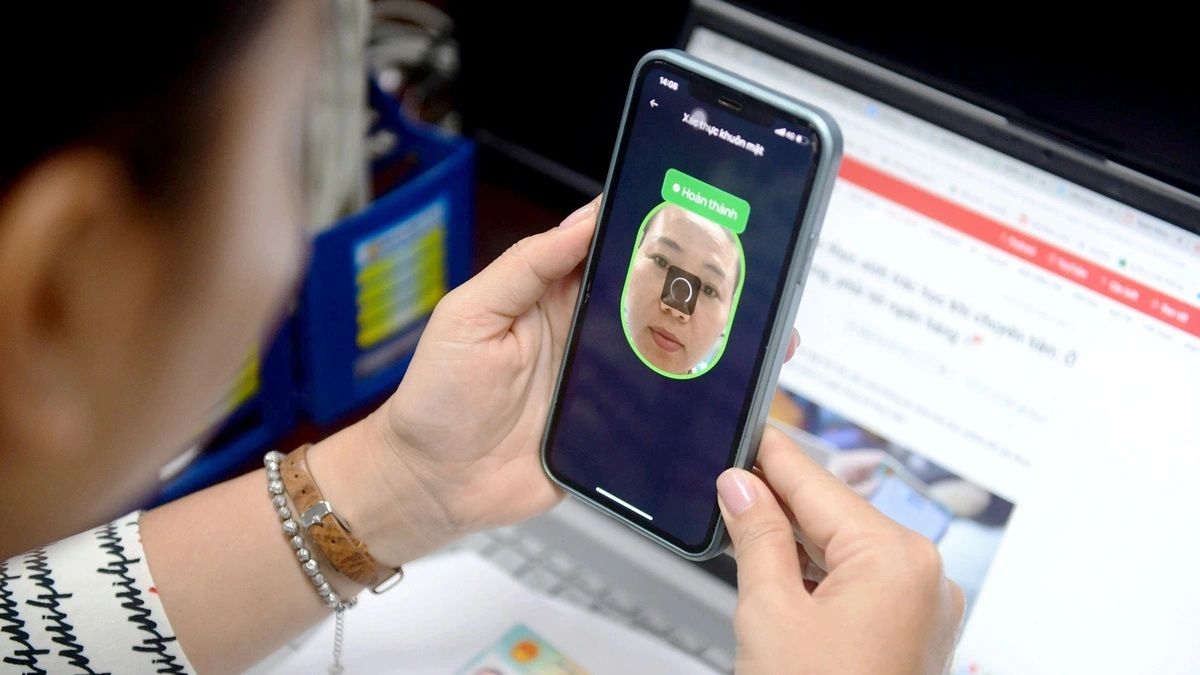
Voice DNA: The inimitable voiceprint
Against this backdrop, Voice DNA or Voice Biometricsnis gaining traction as a supplementary biometric authentication layer for existing security infrastructures.
Rather than verifying customers solely based on what they know or what device they hold, Voice DNA analyzes the unique biological characteristics and distinct attributes of an individual's voice. These unique traits form a distinct voice profile, helping to verify whether the person making the call or transaction is indeed the registered customer.
Crucially, Voice DNA should not be viewed as a silver bullet to replace existing authentication methods. Its true strength lies in adding an extra biometric layer to a multi-tiered security model.
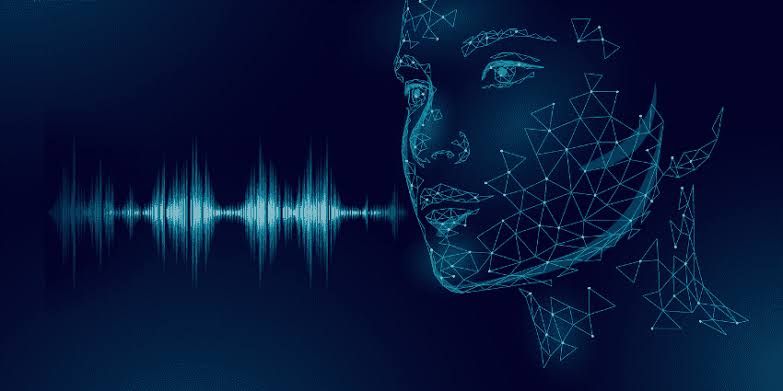
Modern Voice DNA systems can integrate Voice Biometrics with Anti-spoofing and Deepfake Detection technologies. The goal is not just to answer, "Does this voice match the customer?", but also to evaluate: "Is this voice coming from a live human, or is it a synthetic, spoofed, or replayed audio track?"
In the ongoing arms race between generative AI and anti-fraud technologies, no single authentication method can solve the security puzzle on its own. As identities become easier to forge through sophisticated visual and vocal manipulations, banks must embrace a defense-in-depth approach, combining multiple independent signals to stay one step ahead in identifying real customers.